
California Severance Lawyer for Employees
Understanding Your Severance Agreement Before Your Sign
A severance agreement is more than a final paycheck. It is a legal contract that may affect your severance pay, benefits, legal rights, future employment, and ability to bring claims against your former employer.
Many employees are handed a severance offer during a stressful moment, often after a layoff, termination, resignation request, or workplace dispute. The employer may want a quick signature, but signing too soon can create lasting consequences.
Hershey Law represents California employees who need help reviewing, understanding, and negotiating severance agreements. If you received a severance package, our team can help you evaluate the offer, identify potential legal claims, and determine whether better terms may be available.
What Is a Severance Agreement
A severance agreement is a contract between an employee and employer that usually provides severance pay or other benefits in exchange for certain promises. Most often, the employee agrees to release legal claims against the company.
A severance agreement may include terms involving:
Severance pay
A lump sum payment or salary continuation
Health insurance or extended benefits
Unpaid wages, commissions, or bonuses
Return of company property
Confidentiality and non-disparagement provisions
Non-compete or non-solicitation language
Release of claims
Future employment restrictions
Cooperation obligations
Legal fees or court costs in certain disputes
Before signing, employees should understand exactly what they are receiving and what they are being asked to give up.
Does California Law Require Severance Pay?
California law does not generally require employers to provide severance pay. Severance pay is usually voluntary unless it is required by an employment contract, employment agreement, company policy, or negotiated separation agreement.
That means a severance package is often a matter of negotiation. Employers may offer severance to reduce the risk of litigation, secure a release of claims, protect company information, or manage the transition after a termination or layoff.
Even when an employer is not legally required to provide severance pay, the terms of the offer may still be negotiable.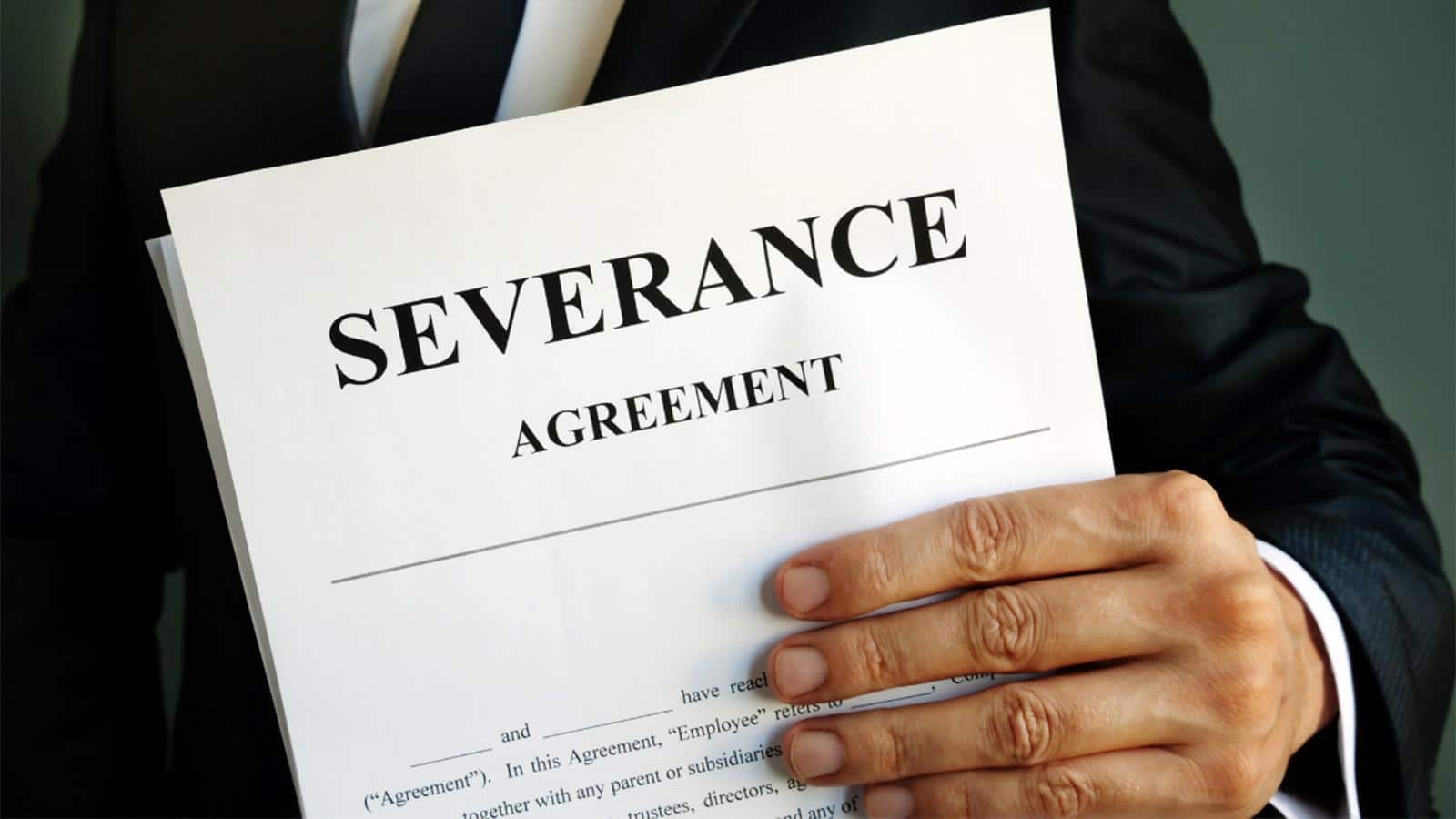
What Is Typically Included in a Severance Package
Every severance package is different, but common terms include:
- A severance payment based on salary or length of service
- A lump sum payment or payments over time
- Continued health insurance or COBRA contributions
- Payment of earned wages or accrued vacation
- Outplacement services
- Neutral reference language
- Treatment of commissions, bonuses, or equity
- Confidentiality provisions
- A release of claims against the employer
Severance pay is only one part of the agreement. Non-compensation provisions can be just as important because they may affect your future employment, reputation, and ability to pursue legal claims.
What You Give Up When You Sign
Most severance agreements require employees to waive legal rights. That release may cover claims related to wrongful termination, discrimination, retaliation, workplace harassment, unpaid wages, or other employment disputes.
A release of claims can limit your ability to file a lawsuit later. For that reason, it is important to evaluate whether you may have potential legal claims before signing.
You should be especially careful if your termination involved:
- Discrimination
- Retaliation
- Sexual harassment or workplace harassment
- Wage violations
- Unpaid wages, commissions, or bonuses
- Medical leave or disability issues
- Whistleblowing
- A layoff that may have violated notice requirements
- A breach of an employment contract
If those issues exist, they may provide leverage in severance negotiations.
Legal Rights You May Still Have
Not every right can be waived in a severance agreement. Some claims and legal protections may remain available even after signing, depending on the wording of the agreement and the law that applies.
A severance agreement generally should not be used to:
- Avoid paying wages that are already owed
- Prevent employees from reporting unlawful conduct to a government agency
- Stop employees from cooperating with investigations
- Interfere with protected rights under California law
- Restrict discussion of certain unlawful workplace acts where California law protects that speech
The specific language matters. A severance lawyer can help determine whether the agreement overreaches or includes provisions that should be revised.
Severance Agreements and Employees Over 40
If you are 40 or older and your severance agreement asks you to waive age discrimination claims, special federal rules may apply.
In many individual separations, employees must receive at least 21 days to consider the agreement and 7 days to revoke it after signing. In group layoffs or termination programs, the review period may be 45 days. The agreement must also be written clearly and must advise the employee to consult an attorney.
If you are over 40, do not assume the deadline your employer gives you is valid. Have the agreement reviewed before signing.
Non-Compete and Future Employment Restrictions
California generally limits non-compete agreements. Many provisions that restrict an employee from working in their field are not enforceable under California law.
Still, employers may include language that appears to restrict future employment, clients, customers, vendors, or prospective employers. Some agreements also include trade secret, confidentiality, or non-solicitation provisions that need careful review.
A severance agreement may also include language about company property, intellectual property, or confidential information. These provisions can affect what you can take with you, what you can say, and how you move forward in your career.
No-Rehire Clauses
Some severance agreements include no-rehire language. These provisions may attempt to prevent the employee from working for the company again, including affiliates, subsidiaries, parent companies, or related entities.
California restricts certain no-rehire clauses in employment settlement agreements. If your severance agreement includes broad language that affects future employment, it should be reviewed carefully.Can You Negotiate a Severance Agreement?
Yes. Severance agreements can often be negotiated.
Depending on the circumstances, employees may be able to negotiate:
- More severance pay
- A different payment structure
- Continued benefits
- Payment of unpaid wages, commissions, or bonuses
- Neutral reference language
- Outplacement services
- Removal or revision of restrictive clauses
- Better confidentiality or non-disparagement language
- Legal fees for agreement review
- A narrower release of claims
- More favorable treatment of equity or deferred compensation
You do not have to negotiate directly if you are uncomfortable doing so. A severance agreement lawyer can communicate on your behalf and propose revised language to protect your interests.

When You May Have Leverage
Employees often have more leverage than they realize. A severance offer may be improved if there are potential legal claims or unresolved compensation issues.
You may have leverage if:
- You were wrongfully terminated
- You reported harassment, discrimination, or illegal activity
- You are owed unpaid wages, commissions, or bonuses
- The employer violated company policies
- You were treated differently from other employees
- You were terminated after requesting leave or accommodations
- You were part of a layoff that may involve notice issues
- The agreement contains overly broad or unfair provisions


What If You Were Wrongfully Terminated
If you believe you were terminated for an illegal reason, do not sign a severance agreement until you understand your options.
Wrongful termination may involve:
- Retaliation
- Discrimination
- Whistleblowing
- Reporting wage violations
- Reporting harassment
- Taking protected leave
- Refusing to participate in unlawful conduct
- Termination that violates an employment contract
Unpaid Wages and Severance Agreements
Severance pay is different from wages you have already earned. If your employer owes you unpaid wages, commissions, bonuses, or accrued vacation, those issues should be reviewed separately from the severance package.
An employer should not use severance pay to avoid paying compensation already owed. If your final pay appears incomplete, that can affect your negotiation strategy.
Severance Pay and Unemployment Benefits
Receiving severance pay does not automatically mean you are disqualified from unemployment benefits. However, unemployment benefits are handled by the state and depend on the facts of the separation, the payment structure, and applicable agency rules.
Because Hershey Law focuses on employment law claims and severance negotiations, employees should follow state unemployment instructions carefully and treat unemployment benefits as a separate issue.What To Do Before Signing
Before you sign a severance agreement:
- Read the full agreement carefully.
- Identify the deadline to respond.
- Confirm whether earned wages, vacation, bonuses, or commissions are included.
- Review the release of claims.
- Look for confidentiality, non-disparagement, non-compete, or no-rehire language.
- Compare the agreement to your employment contract or company policies.
- Preserve emails, offer letters, pay records, and performance reviews.
- Avoid relying on verbal promises.
- Seek legal advice before signing.
- Do not sign unless you understand the consequences.
A severance agreement is binding once signed, unless limited revocation rights apply.
What If You Already Signed
If you already signed a severance agreement, your options may be limited, but not always closed. Certain agreements may include a revocation period, especially for age discrimination waivers involving employees over 40.
In some circumstances, a severance agreement may also be challenged if it violates the law, was signed under improper pressure, or contains provisions that California law does not allow.
If you recently signed and now have concerns, speak with an employment attorney as soon as possible.
How Our California severance Lawyers Can Help
Hershey Law reviews and negotiates severance agreements for California employees. Our attorneys help clients understand what the agreement means, what rights may be released, and whether better terms may be available.
We can help by:
- Reviewing the severance offer
- Explaining the release of claims
- Identifying potential legal claims
- Evaluating wrongful termination or retaliation issues
- Reviewing unpaid wages, bonuses, or commissions
- Proposing revised language
- Negotiating severance terms
- Protecting your future employment interests
- Advising before you sign

Why Employees Choose Hershey Law
Hershey Law is an employment law firm serving Los Angeles, Orange County, and employees throughout California. Our team handles severance agreements, wrongful termination, retaliation, discrimination, harassment, wage and hour claims, and whistleblower matters.
We provide clear guidance, careful agreement review, and practical advice so employees can make informed decisions before signing. When negotiation is appropriate, we work to improve the terms and protect your interests.
Ready to Discuss Your Case?
Hershey Law protects employees across California, from startups to large-scale firms. If you’ve faced discrimination, retaliation, or wrongful termination, contact us today!
Frequently Asked Questions
What Does a Severance Lawyer Do?
A severance lawyer reviews severance agreements, explains the legal terms, identifies potential claims, and negotiates better terms where appropriate.
Does California Require Severance Pay?
No. California law generally does not require employers to provide severance pay unless an employment contract, employment agreement, company policy, or other enforceable promise requires it.
Should I Sign a Severance Agreement Without an Attorney?
It is risky to sign without understanding what you are waiving. A severance agreement may release legal claims, restrict future employment, or affect compensation you may still be owed.
Can I Negotiate a Severance Package?
Yes. Employees can often negotiate severance pay, benefits, payment timing, reference language, release terms, and restrictive provisions.
Can a Severance Agreement Stop Me From Suing?
A severance agreement may waive the right to bring certain legal claims. However, not all rights can be waived, and the language should be reviewed before signing.
What If I Was Wrongfully Terminated?
If you may have been wrongfully terminated, your potential claims may affect the value of your severance negotiation. Do not sign until you understand what rights you may be giving up.
Can I Still Get Unemployment Benefits After Severance?
Possibly. Eligibility for unemployment benefits depends on state rules and the facts of your separation. Severance pay does not automatically decide eligibility.
Our Services

Whistleblower

Wrongful Termination

Severance
Agreement Review
Discrimination
Whistleblower
Wrongful Termination
Severance
Agreement Review
Discrimination

Wage & Hour

Retaliation

Harassment

Layoffs & WARN Act Violations
Wage & Hour
Retaliation
Harassment
Layoffs & WARN Act Violations
Results-Oriented
Standing Up for Workers Across California
Request a Free Consultation With a California Severance Lawyer
If you received a severance agreement, do not sign before you understand what it means. Hershey Law can review the agreement, explain your options, and help you pursue better terms when appropriate.
Request a Free Consultation or call 818-962-0445 to discuss your severance agreement with Hershey Law.
Contact Hershey Law to Receive a Fair Severance Package
Don’t want your employer to decide your future with a severance agreement? Take charge of the situation with our attorneys. We review your employment details including pay and benefits you are entitled to receive as per the governing law.
Additionally, we negotiate with your employer for your rights and advocate for your best interests. Do not leave your financial future to chance. Secure it today by booking a free consultation with our Employment team.